"We'll generally have the largest day of the year," Hank Lovejoy told a KTEN reporter last October, standing in the cafe on Main Street his family has run since 1954.
He was talking about the Peanut Festival, and he wasn't exaggerating. Even with rain moving through downtown last year, more than 30,000 people showed up for what turned out to be the 59th running of the event. This October 17, Whitesboro hits number 60, and if you've lived here through the last few years, you already know something the festival flyers won't tell you: the Main Street this year's crowd walks down isn't quite the one that hosted festival number 55, or even 58.
That's the part worth sitting with. The anniversary is a nice round number. What's actually changed underneath it is a stretch of storefronts that the city has been rebuilding, block by block, while everyone was watching the calendar count down to October.
A Festival Old Enough to Predate Most of Its Own Storefronts
The Peanut Festival dates to 1965, which means it has been a fixture of the third Saturday in October for six decades now, longer than most of the buildings currently facing Main Street have worn their current facades. Last year's 59th edition followed a format the festival has leaned on for years: a welcome from the Main Stage at Center and Main, a parade stepping off at 10 a.m., and more than 200 vendor booths filling the downtown streets for a free event with no gate charge. Trollinger Park hosted a car show presented in part by the Southern Cross Car Club, with proceeds going to the Grayson County Children's Advocacy Center, while local storefronts stayed open to catch the day's foot traffic.
None of that is new. What is new, or at least new enough that longtime residents might not have connected it to the festival yet, is what's been happening to the buildings those 200 vendor booths will be lined up in front of.
What Was Actually Under Construction
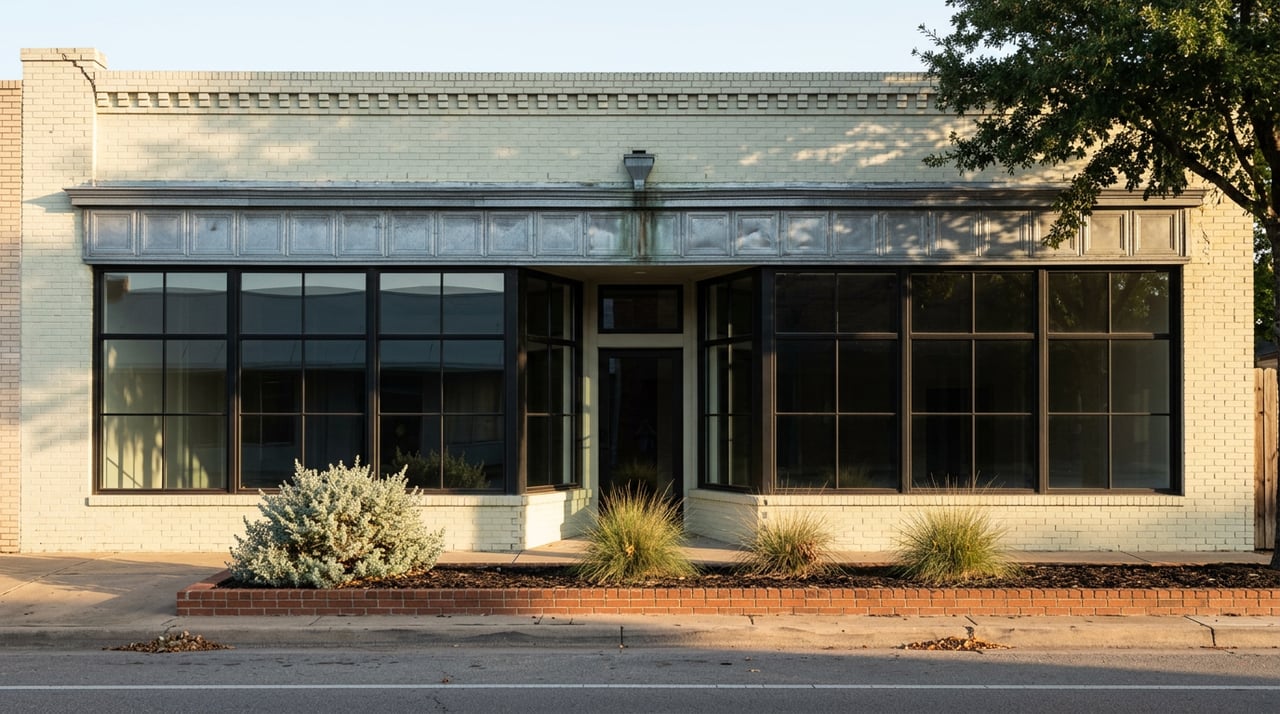
Whitesboro's economic development arm has spent the last several years working through a list of Main Street projects that don't show up on a festival flyer but do show up on the block. The city's façade grant program has put money into storefronts at 108 E. Main Street, 112 E. Main, and 125 E. Main Street, along with a grant to Texas Lawn Medics. Dennards got help covering construction costs on a new building. The city partnered with TxDOT to rebuild the downtown sidewalks entirely, and it helped relocate utilities underground between Pizza Hut and 7-11 to free up a shared driveway. When Holiday Auto Group needed a new building, the city helped relocate the sewer line to make it possible. Somewhere in that same stretch of years, the city also helped bring Hughes Lumber to town.
Individually, these are the unglamorous mechanics of small-town growth: a sidewalk grant here, a utility relocation there. Together, they add up to a Main Street that has been rebuilt at street level while the Peanut Festival kept running on schedule above it, one October after another. If you drove past a torn-up sidewalk in front of a familiar storefront sometime in the last few years and didn't think much of it, that project is very likely part of the same push that's now finished in time for the 60th anniversary crowd to walk it.
The Storefronts Filling In Behind the Construction
The businesses occupying those refreshed addresses are a mix of the very old and the fairly new. Lovejoy's on Main anchors one end of that continuity, a cafe that has been serving Main Street since 1954, eleven years before the first Peanut Festival ever happened. Sweet Andi's Bakery, on the downtown square, has built its own multi-decade run turning out fried pies and cakes for a clientele that treats the shop as a standing appointment rather than an occasional stop.
Newer names are filling in around them. Tender Smokehouse, a breakfast-and-brunch spot on US-377, has been building a following with an updated menu. On the food-truck side, Food of Dreams LLC settled into its current spot in 2025 and has been serving up burger variations, including a veggie-patty build it calls the Field of Dreams, from an outdoor setup with umbrella-covered seating. None of these are the businesses that were on Main Street for festival number 40 or even festival number 50. They're the ones that will be open for number 60.
Tina Newman, with the Whitesboro Area Chamber of Commerce, put the economics of festival day plainly to KTEN last year: the crowd is "huge for our community, huge for our businesses, restaurants, boutiques, everything," and even the rain that day pushed people into storefronts they might not have wandered into otherwise. That's the mechanism the whole festival runs on. A single Saturday generates enough foot traffic to matter to a shop's year, which is exactly why the timing of the facade work matters too. A storefront finished in September has a full festival crowd walking past it in October. A storefront still mid-renovation does not.
Reading Festival Day Like Someone Who Lives Here
For anyone who has done this a few times, last year's edition offers a rhythm that outsiders miss on their first pass through, and that the 60th is likely to echo:
- Park early or plan to walk in. The parade route runs through Center and Main, and by mid-morning that stretch of downtown closes to through traffic.
- The parade starts around 10 a.m., not at the gate opening. Last year's festival opened at 9 for early vendor browsing, with the Main Stage welcome and the parade itself following about an hour later.
- Trollinger Park runs on its own schedule. Last year's car show awards weren't handed out until 3 p.m., so if that's the part of the day you care about, plan your loop through the vendor booths accordingly.
- Storefronts stay open, and that's worth remembering if you're trying to beat the crowd into Lovejoy's or Sweet Andi's. The businesses that see the traffic spike are the same ones lining the parade route, which means the best seat is often a table inside rather than a spot on the curb.
- It's free. No gate charge is part of the festival's identity for its 60th year same as always, confirmed on the Chamber's own festival page.
What the Round Number Actually Signals
The easy story about a 60th anniversary is nostalgia: six decades of the same parade route, the same third Saturday, the same small-town rhythm repeating itself. That story isn't wrong, but it undersells what's actually happened to get Main Street ready for this particular year.
The city didn't rebuild its sidewalks or hand out facade grants because the festival was turning 60. Those projects moved on their own municipal timeline, driven by budget cycles and TxDOT partnerships that have nothing to do with anniversaries. But the two timelines landed in the same year anyway, and that coincidence means this festival's crowd is walking through the most finished version of downtown Whitesboro that any Peanut Festival has ever run through. The sidewalks are new. Several facades are new. The businesses filling those storefronts are a genuine mix of Whitesboro's oldest names and its newest ones, standing on the same block for the same Saturday.
That's the thing worth knowing if you live here and have watched these pieces arrive separately over the past few years without ever seeing them laid out together. The 60th Peanut Festival isn't just an anniversary. It's the first year the festival gets to show off a Main Street that finally caught up to it.
If you're weighing whether Whitesboro's downtown momentum has staying power beyond one festival Saturday, that's a conversation worth having with someone who watches this stretch of Highway 82 year-round. Lake & Country Realty keeps an eye on exactly this kind of local detail across Whitesboro and the surrounding horse country, so reach out to talk to a Lake & Ranch Specialist whenever you're ready.