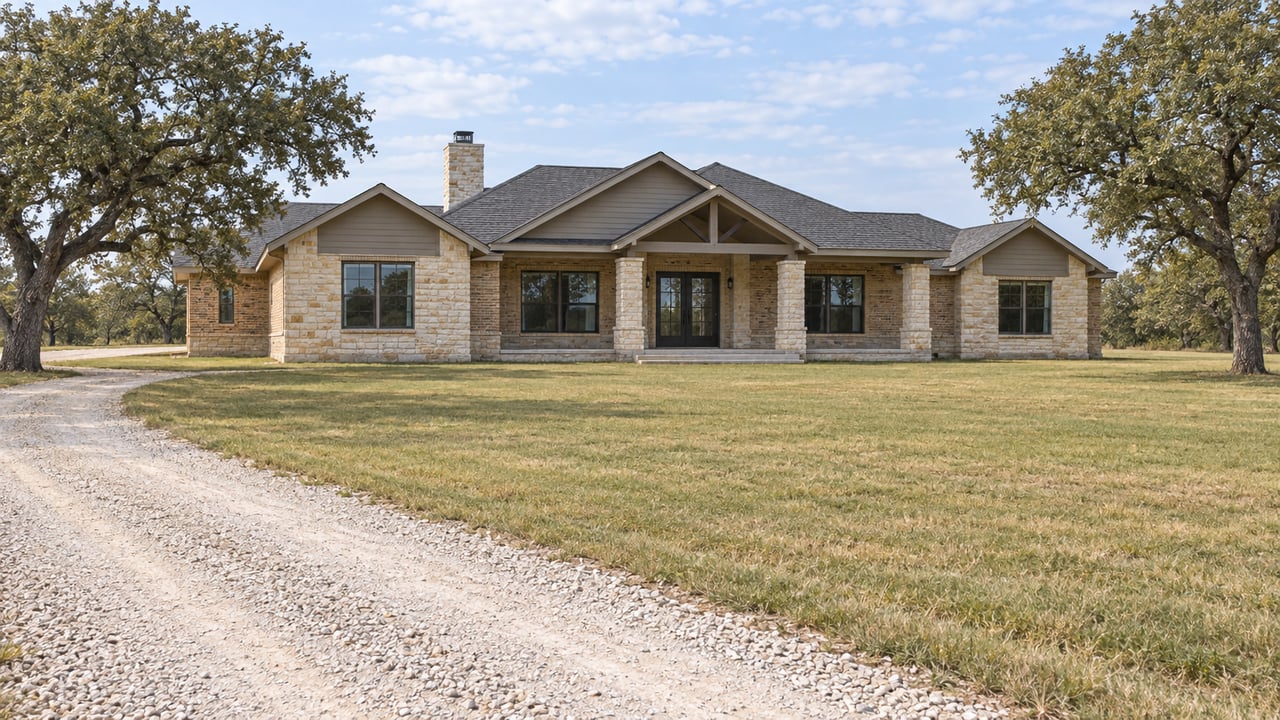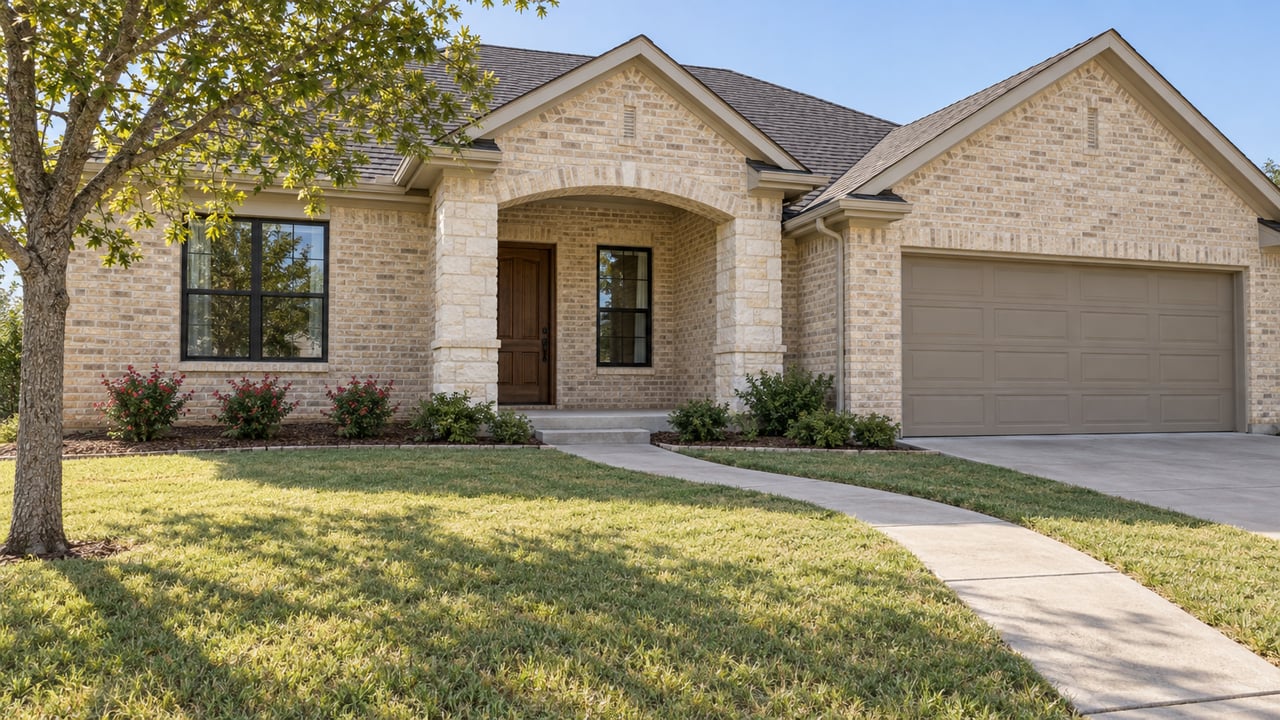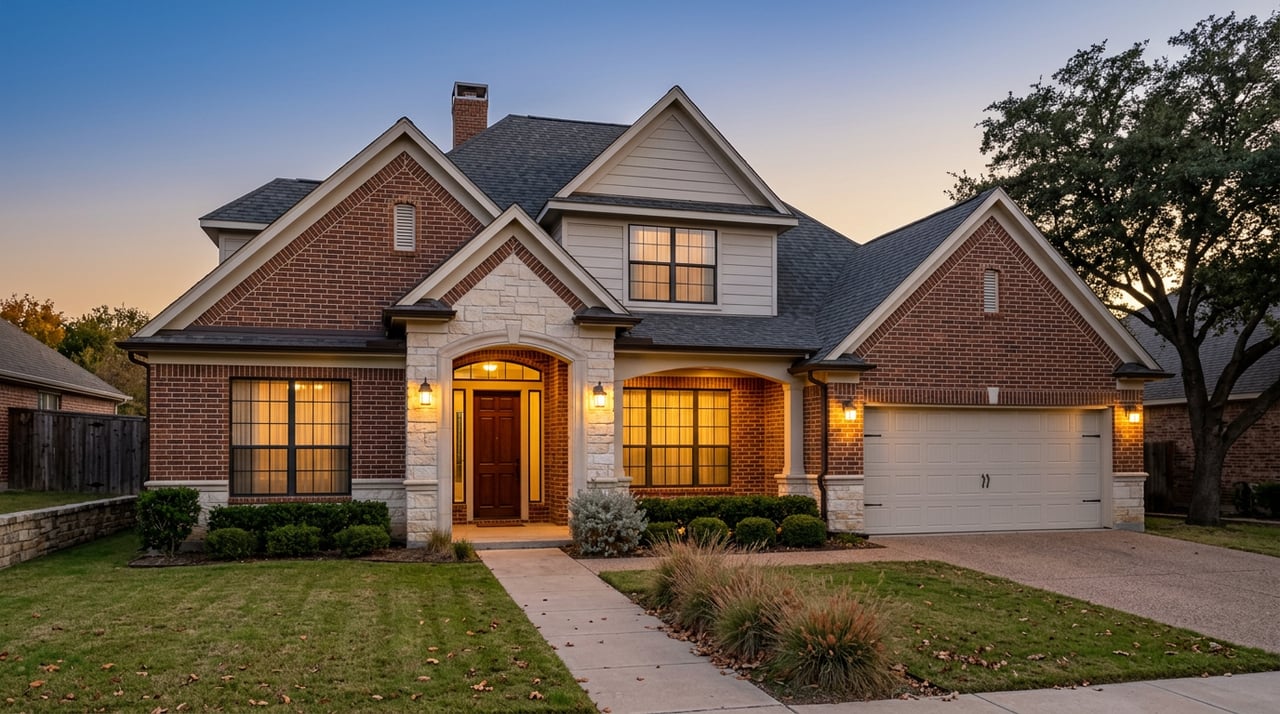
If Texas Instruments is putting $40 billion into a semiconductor campus a few miles up US-75, why did roughly one in three homes listed in Sherman need a price cut this spring? Why did the typical listing sit on the market for 111 days, more than three times what you'd expect in a market everyone describes as red hot?
That's the question a lot of relocation buyers are asking right now, and it's a fair one. The headlines about Sherman read like a boomtown script: Texas Instruments, GlobalWafers, Coherent, thousands of jobs, billions of dollars, a mayor calling it a "boomtown type of atmosphere," as reported by WFAA. But the March 2026 numbers from the local resale market tell a quieter story. Homes were selling about 3% below list price on average. Only 3.1% of listings sold above asking. That's not the behavior of a market where buyers are competing for scraps.
Both things are true at once, and understanding why is the difference between reading Sherman correctly and reading it like a headline.
The Subdivisions Got There First
Walk the US-75 corridor right now and you'll see the mechanism in plain concrete and lumber. Developers didn't wait for the semiconductor jobs to show up before they started building homes for the people who'll fill them.
Covenant Development and Rockhill Capital & Investments broke ground on Heritage Ranch, a 440-acre master plan at FM 1417 and US 82 with roughly 750 homes alongside retail, office, and hospitality space. Highland Homes is building there starting from the $290,000s, and K. Hovnanian's homes begin around $345,000. The community even includes a new Sherman ISD elementary school built specifically for the families expected to move in.
South of the city in Dorchester, Centurion American is developing Cottonwood, a 678-acre project slated for more than 2,100 homes from D.R. Horton, Beazer Homes, PulteGroup, and M/I Homes, explicitly positioned to house workers arriving as the chip industry expands through Grayson County.
And in July 2026, Inspire Communities opened sales at Frontera, a 113-acre manufactured home community with more than 400 homes planned, starting in the high $80,000s. That price point, a newly built home for under six figures, has all but disappeared from North Texas. Its arrival is itself a signal: builders are betting on a workforce that needs housing at every rung, not just move-up buyers chasing entertainment districts.
Add it up and Sherman has had well over 6,000 homes built or under construction in recent years, arriving on a construction timeline that doesn't wait for hiring announcements.
The Jobs Are Landing in Installments
Here's the part that doesn't make the press releases: the employers building these fabs aren't hiring all at once, and they never said they would.
Texas Instruments broke ground on its Sherman mega-site in May 2022 and didn't start production at the first of its planned four fabs until December 2025. According to HUD's housing market analysis for the Sherman-Denison metro, TI adds roughly 800 permanent employees as each new phase commences operations. With four phases planned toward a total of around 3,000 direct jobs, that's a hiring curve stretched across years, not a single moment when 3,000 people show up looking for houses.
GlobalWafers, operating in Sherman as GlobiTech, tells a similar story with an extra wrinkle. The original wafer plant, first pitched as a $5 billion investment back in 2022, finally began production in May 2026. HUD's analysis projects that facility won't be fully operational until 2031, adding about 375 permanent employees per phase along the way. And GlobiTech isn't done: a separate expansion announced this year, expected to create another 1,500 jobs, doesn't even start phase one construction until later in 2026, with operations targeted for 2029.
That's three more years before that second facility employs anyone. Meanwhile the subdivisions built to house those workers are already taking move-in reservations.
Sherman's economy also isn't a one-employer bet, which matters for how you read the pace of this ramp. Tyson Foods has run a case-ready meat facility in the city since 2005 and now employs nearly 1,800 people there. Coherent, which makes optical chips for AI data centers, recently completed a $650 million expansion. The Sherman Economic Development Corporation's employer list runs more than 30 companies deep. The chip plants are the headline, but they're layered on top of a base economy that was already diversified before TI broke ground.
What the Discount Actually Buys
For a buyer comparing Sherman to the more established suburbs closer to Dallas, the price gap is the first thing that jumps out, and it's worth putting real numbers next to it rather than just calling it "affordable."
As of March 2026, Sherman's median sale price sat at $290,500. Compare that to $708,225 in Frisco, $790,000 in Prosper, $518,995 in Celina, and $485,000 in McKinney. Sherman is running roughly 40% to 60% below those markets on a straight median comparison.
Zillow's home value index for Sherman, a different measure that smooths out month-to-month swings, put the typical home value at $260,291 as of June 2026, up a modest 3.1% over the prior year. That's appreciation, but it's not the kind of spike you'd expect if buyers were racing each other for the last available lot near a mega-project. It's the appreciation pattern of a market absorbing new supply about as fast as it's arriving, not one running short of it.
That gap is the practical payoff of the timing mismatch. Builders priced their product for the workforce Sherman is going to have in 2028 and 2029. Right now, in late 2026, that workforce is still partway through the door.
The Window This Opens, and What Closes It
For a buyer with a multi-year horizon, this is the part that matters most: the current conditions favor you, and they're tied to a calendar you can actually read.
With homes sitting a median 111 days on market and roughly a third of listings taking a price cut, sellers in Sherman right now are working with less leverage than sellers in Frisco or McKinney. That shows up in practical ways: more room to negotiate on price, more willingness from sellers to cover closing costs or address inspection items, and less pressure to waive contingencies just to compete.
That window is tied directly to the hiring math above. As TI's remaining fab phases come online and GlobiTech's second facility moves from groundbreaking toward its 2029 target, the households that are supposed to fill Heritage Ranch, Cottonwood, and the rest of the pipeline start arriving in real numbers. Regional forecasts describe the 2026 through 2028 stretch as when Sherman-Denison's housing demand story is actually supposed to play out, not the years already behind it.
There's also a physical friction worth flagging for anyone judging Sherman by a current drive-through: the US-75 widening project has meant lane closures and detours through much of 2026. That's a short-term commute headache, not a permanent condition, and it's the kind of infrastructure work a growing employment corridor typically needs before, not after, it fills up with new residents.
None of this is a guarantee that prices will jump on a fixed date. Phased hiring can slip. Construction timelines move. But the mechanism is visible enough to reason about: rooftops arrived ahead of the payroll that's supposed to fill them, and the gap between those two curves is exactly why today's Sherman listings behave like a buyer's market inside a genuine growth story.
A Few Questions Worth Asking Before You Write an Offer
Is Sherman's price softness a sign something's wrong with the market? Not based on what's driving it. The softness tracks with a construction pipeline that outran the current hiring pace at TI and GlobiTech, not with declining demand for the city itself. Population estimates put Sherman at 52,417 residents in July 2025, up from 50,229 the year before.
Should I wait for prices to drop further, or buy now? That depends on your time horizon more than on trying to time a bottom. If you're planning to hold for several years, buying while days on market are elevated and price drops are common gives you negotiating room that's likely to shrink as the 2026 to 2028 hiring ramp continues.
Does this apply the same way in every part of Sherman? No. New-construction communities built specifically for incoming workforce, like Heritage Ranch and Cottonwood, will likely respond to hiring news faster than older, established neighborhoods. Each carries its own inventory and pricing pattern worth walking through with someone who tracks the local market closely.
If you're weighing Sherman against other North Texas suburbs, or trying to figure out which part of the growth corridor fits your timeline and budget, that's exactly the kind of question our team at Lake & Country Realty works through with buyers every week. Talk to a Lake & Ranch Specialist before you write an offer in a market that's still finding its footing.