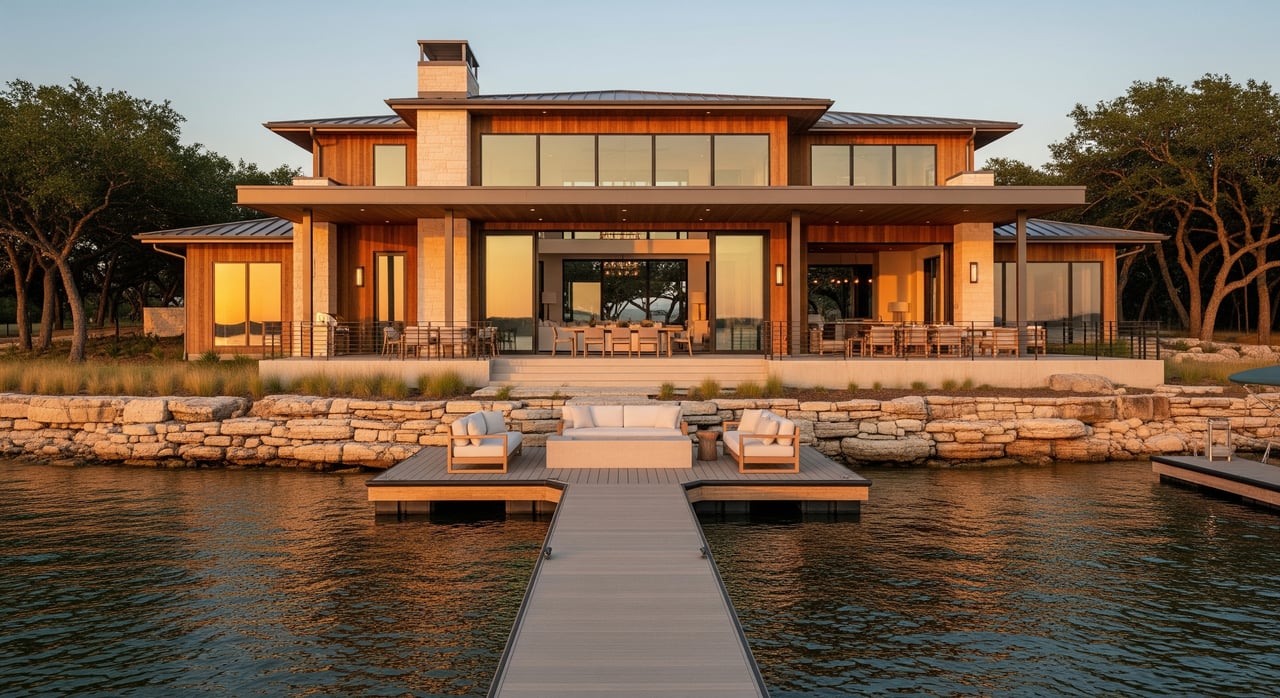
Thinking about buying a Lake Texoma vacation rental for both fun and cash flow? You are not alone. The lake draws steady weekend and holiday traffic from the Dallas–Fort Worth area, and the right property can book well when managed thoughtfully. In this guide, you will learn what drives demand on the Texas side of Lake Texoma, how to model returns, the local rules and insurance to check, and a step-by-step due diligence plan so you can decide with confidence. Let’s dive in.
Why Lake Texoma draws renters
Lake Texoma sits on the Texas–Oklahoma border and is a go-to regional destination for boating, striped bass fishing, watersports, and quick getaways from DFW. The primary guest base is regional, with many weekend and holiday travelers. This creates stronger seasonality in spring and summer, with added demand around school breaks, fishing tournaments, and holiday weekends.
Convenience is a major driver. Depending on where you buy, the lake is roughly 60 to 90 miles from many DFW suburbs. Guests often look for easy access to marinas and boat ramps, reliable high-speed internet, pet-friendly policies, and standout amenities such as private docks or slips, lake access, and outdoor gathering spaces.
To understand your micro-market, look closely at:
- Local events and tournaments that spike bookings.
- Competing inventory on platforms like Airbnb and Vrbo.
- What amenities similar rentals offer and how those affect pricing.
Model the numbers first
Before you shop houses, build a conservative, data-driven model. Focus on these core metrics:
- Net Operating Income (NOI): Gross rental income minus operating expenses (excluding mortgage payments).
- Capitalization Rate (Cap Rate): NOI divided by purchase price, expressed as a percentage.
- Cash-on-Cash Return: Annual pre-tax cash flow divided by total cash invested (down payment, closing costs, initial repairs and furnishings).
- Gross Rent Multiplier (GRM): Purchase price divided by gross annual rental income.
- Break-even occupancy: (Annual operating expenses + annual debt service) / (Average daily rate × 365).
Collect the right inputs so your model reflects Lake Texoma’s realities:
- Revenue drivers: Comparable short-term rental listings with average daily rate (ADR), occupancy by month, cleaning fees, and length of stay.
- Purchase inputs: List and sale prices for similar lakefront and near-lake homes.
- Operating costs: Utilities, insurance, property taxes, HOA dues, landscaping and shoreline care, management fees, cleaning and supplies, ongoing repairs, software and accounting, and platform fees.
- One-time costs: Furniture, linens, kitchen gear, safety equipment, dock inspections or repairs, and initial marketing.
- Financing terms: Rate, down payment, loan type (second home or investment), points, and amortization.
- Seasonality: Use conservative occupancy based on platform analytics and local patterns.
Build multiple scenarios to see your sensitivity:
- Conservative: Lower ADR and occupancy, higher maintenance and insurance.
- Base case: A realistic midpoint based on current comps.
- Optimistic: Only if supported by hard data, such as peak-season ADR with strong amenities.
Also budget a repair and replacement reserve, commonly 5 to 15 percent of gross revenue, plus extra for shoreline or dock upkeep. Track pre- and post-tax returns, and consult a CPA to understand how depreciation and personal use can affect your tax picture.
Rules, taxes, and insurance to confirm
Short-term rental rules vary by city and neighborhood around Lake Texoma. Denison, Sherman, Pottsboro, and other municipalities may require registration, permits, occupancy limits, and safety or noise compliance. Some HOAs restrict or prohibit short-term rentals. Confirm everything before you make an offer.
What to check:
- Municipal codes and permits: Review city websites and confirm with planning or code enforcement. Ask the seller and listing agent for any existing STR registrations and compliance history.
- HOA and deed restrictions: Request covenants in writing and look for caps, minimum stay rules, or bans.
- Hotel occupancy tax: Texas requires collection of state and often local hotel occupancy taxes on short stays. You will need to register with the Texas Comptroller and any applicable local authority.
- Income taxes: Rental income is typically taxable; many operating expenses and depreciation may be deductible. Personal use can change the rules. Consult a CPA.
Insurance and flood risk:
- Many lakefront or near-lake properties carry elevated water or flood exposure. If the home is in a FEMA Special Flood Hazard Area, a lender may require flood insurance.
- Standard homeowners policies often exclude short-term rental activity and water-related damage. Get landlord or vacation-rental coverage, plus liability that contemplates guests, and endorsements for docks, pools, or watercraft as needed.
- Obtain FEMA flood maps for the specific property and get formal quotes early so your pro forma reflects true costs.
Shoreline and dock rules:
- Docks, seawalls, ramps, and shoreline work may require permits and must follow local, state, and federal rules. The U.S. Army Corps of Engineers manages much of Lake Texoma’s shoreline.
- Verify whether the property includes deeded water access, boat slip rights, or easements, and who maintains shared structures.
Property types and trade-offs
- True lakefront with private dock: Commands premium purchase prices and higher ADR potential. Expect higher maintenance, more complex insurance, and possible permitting requirements.
- Near-lake or walkable access: Lower acquisition cost and simpler insurance, yet still attractive to renters seeking convenience to marinas and ramps.
- Interior properties: Often lowest purchase price and more stable off-season bookings if positioned for anglers or families seeking value. ADR may be lower.
Think beyond the view. Guests value reliable access, ease of use, and accurate listings. If you advertise a dock or ramp proximity, it must deliver.
Operations and management realities
Success relies on consistent guest experience. Renters expect a clean, well-maintained home, clear check-in instructions, strong Wi‑Fi, functioning appliances, and safety basics like fire extinguishers and life jackets where water access is promoted.
Turnover logistics matter. You will need reliable cleaners and a plan for quick maintenance responses. If you do not live nearby or prefer a hands-off approach, consider a professional property manager. Full-service managers commonly charge 20 to 35 percent of rental revenue. A la carte options can lower the fee but increase your workload.
Marketing channels include Airbnb, Vrbo, a direct-booking site, and social media. Quality photography, accurate descriptions, and competitive amenities have a large impact on both ADR and occupancy.
Budget for ongoing costs
Vacation rentals carry visible and hidden expenses. Plan for:
- Cleaning and laundry between stays.
- Utilities, trash, pest control, landscaping, shoreline maintenance.
- Septic or sewer servicing where applicable.
- Periodic dock or bulkhead inspections and repairs.
- Repairs and replacements for high-wear items and appliances.
- Platform fees, credit card processing, accounting or software.
- Property management if you do not self-manage.
- Property taxes and insurance.
Maintain a dedicated reserve that covers several months of mortgage and operating expenses, plus a capital budget for shoreline and structural needs.
Step-by-step due diligence
Use this workflow to move from curiosity to clarity.
Pre-offer research
- Market snapshot: Gather ADR, occupancy, and seasonality from STR analytics providers such as AirDNA or Mashvisor. Manually review active listings on Airbnb and Vrbo in the same shoreline segment.
- Sales comps: Review recent MLS sales for lakefront and near-lake homes. Compare by size, condition, and shoreline attributes such as dock presence.
- Local rules: Confirm municipal STR ordinances and HOA covenants in writing. Ask the seller for any permits, registrations, and booking history.
Offer and inspection phase
- Inspections: In addition to standard inspections, order dock and bulkhead evaluations, septic and water well inspections if applicable, and a shoreline erosion assessment.
- Title and access: Confirm deeded water access, easements, and any riparian rights in the title commitment.
- Insurance and lending: Obtain quotes for STR-appropriate coverage and flood insurance if needed. Make sure your lender allows short-term rental use at the address.
Post-close setup
- Compliance and accounting: Register for state and local hotel occupancy taxes, set up recordkeeping, and hire a CPA familiar with STRs and Texas rules.
- Furnishing and safety: Equip the home to STR standards with linens, kitchenware, and safety items. Create a detailed inventory list.
- Vendors and management: Secure cleaning, laundry, and maintenance providers. Decide whether to self-manage or hire a local manager.
- Guest experience: Prepare house rules, guest messaging templates, marina and ramp info, and emergency procedures.
Risks and how to hedge
- Market and demand risk: Seasonality and rising competition can pressure occupancy and rates. Mitigate by diversifying marketing channels, running targeted off-season promotions, and cultivating excellent reviews.
- Regulatory risk: Cities or HOAs may change rules or fees. Stay current with municipal actions, maintain good community relations, and select properties that can pivot to mid-term or long-term rentals if needed.
- Physical and environmental risk: Flooding, storms, and shoreline erosion can raise costs. Carry appropriate insurance, budget capital reserves, and prioritize resilient materials and dock design.
- Operational risk: Poor management leads to bad reviews and low bookings. Invest in guest communication, fast response times, and quality control.
Is a Lake Texoma STR a smart buy?
It can be, if you approach it like a business. Choose a property that aligns with what Lake Texoma guests book most, confirm legality and access in writing, model returns with conservative assumptions, and plan for hands-on operations or a capable manager. When you run the numbers with accurate costs, include proper insurance, and maintain reserves, you put yourself in position to enjoy the lake and pursue steady income.
If you want local guidance on neighborhoods, shoreline rules, comps, and management options around Lake Texoma and nearby North Texas communities, connect with the team at Lake & Country Realty®. We can help you evaluate properties, confirm the details that matter, and move forward with clarity.
FAQs
What drives Lake Texoma vacation rental demand?
- Proximity to DFW for weekend trips, plus strong recreation appeal for boating, striped bass fishing, watersports, holiday weekends, and seasonal events.
How do I estimate returns for a Lake Texoma STR?
- Build a pro forma using ADR and occupancy from STR comps, estimate all operating costs, and calculate NOI, cap rate, cash-on-cash, and break-even occupancy under conservative, base, and optimistic scenarios.
Do I need permits to operate a short-term rental in Grayson County?
- It depends on the city and HOA. Check municipal codes for Denison, Sherman, and Pottsboro, confirm HOA covenants, and request any existing permits or registrations from the seller.
How does flood risk affect lake homes at Texoma?
- If the property is in a FEMA Special Flood Hazard Area, lenders may require flood insurance. Get FEMA flood maps and formal quotes early, and ensure coverage accounts for vacation rental use and docks.
Can I add or modify a private dock on Lake Texoma?
- Shoreline and dock changes may require permits and must follow rules overseen by agencies such as the U.S. Army Corps of Engineers. Verify rights, easements, and maintenance responsibilities in writing.
What do property managers charge around Lake Texoma?
- Full-service short-term rental management commonly ranges from 20 to 35 percent of rental revenue, with a la carte options available at lower percentages.
How far is Lake Texoma from the Dallas–Fort Worth area?
- Many parts of Lake Texoma are roughly 60 to 90 miles from DFW suburbs, which supports consistent weekend and holiday demand.