Pricing acreage around Nocona can feel tricky. One parcel sells fast at a premium, while another a mile away lingers for months. If you are buying or selling land, you want a clear, defensible number you can stand behind. This guide gives you a practical process, the local factors that matter most, and the due diligence to avoid surprises. By the end, you will know how to build a realistic price range and move forward with confidence. Let’s dive in.
Know the Nocona land market
Acreage values in Montague County vary by micro-location. Lake frontage, road access, utilities, and usable acres can swing price per acre more than county averages suggest. Start with real local data, then adjust for the features of your specific tract.
Reliable local sources include the Montague County Appraisal District for assessed values, exemptions, and parcel records, the regional MLS for recent sold comps, the Montague County Clerk for deeds and easements, and the City of Nocona for municipal utilities or annexation questions. Regional insights from Texas A&M Real Estate Research Center and Texas A&M AgriLife Extension can help you understand broader land trends that influence buyer expectations.
What drives per-acre value here
Location and access
Proximity to Nocona’s town center and key corridors affects demand. Parcels with paved county road frontage typically command a premium compared to easement-only or primitive-access tracts. Always confirm legal access in the deed and check county road maps.
Water: surface and groundwater
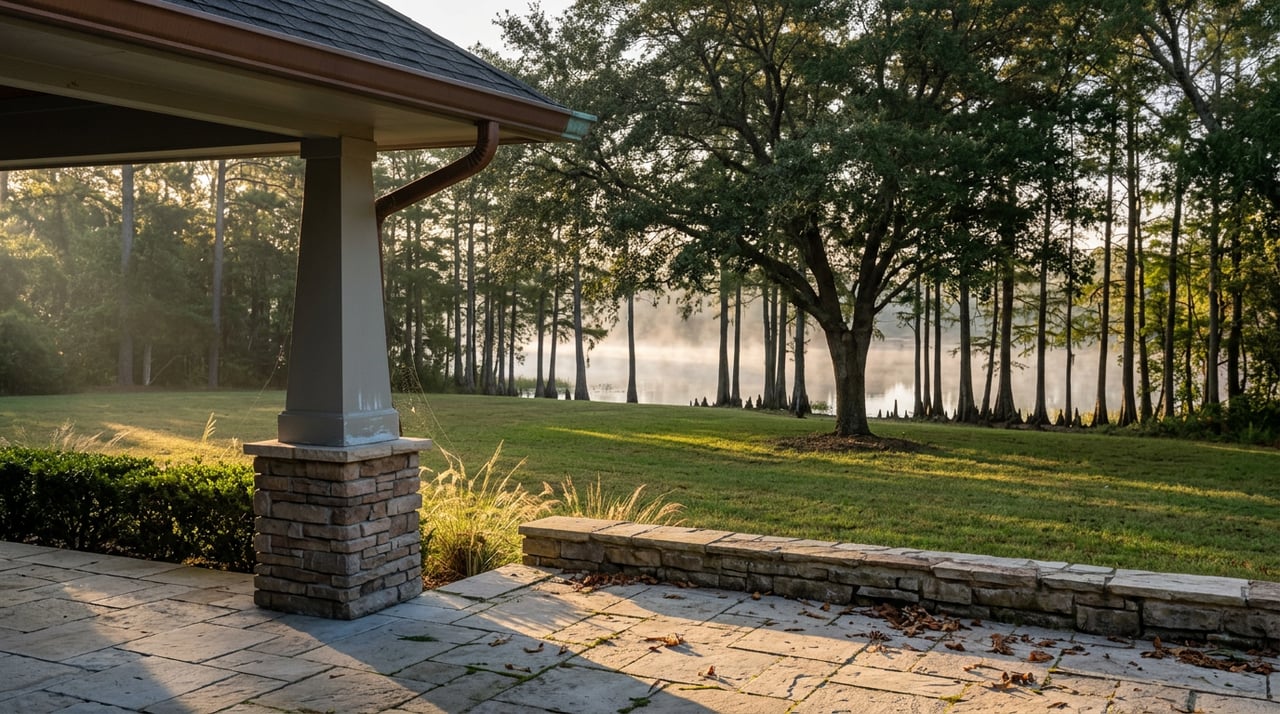
Water features boost value. Lake Nocona frontage or a reliable pond is a strong draw for recreational and residential buyers. If there is a well, verify permits, flow, and water quality; note that a drilled, producing well often translates to higher marketability.
Utilities and services
Power availability, internet options, and whether a property connects to sewer or relies on septic are major pricing drivers. Buyers factor in the cost and time to bring utilities to a homesite, so document what is present and what it takes to add missing services.
Topography, soils, drainage
Flat, well-drained soils that support septic and cost-effective foundations are more valuable than flood-prone or rocky terrain. Use soil maps and flood data to gauge buildability and potential development costs.
Improvements and usable acreage
Existing improvements such as fencing, barns, outbuildings, and driveways add value, but their age and condition matter. Distinguish between gross acres and truly usable acres if some portion is wetland, steep, or heavily brushy.
Legal interests and restrictions
In Texas, mineral rights are often severed. Minerals owned by someone else can impact future surface use and perceived value. Identify recorded easements, covenants, or pipeline corridors, and reflect these in your pricing.
Income potential and taxable status
Ag-use valuation reduces property taxes when qualifying operations are in place. Hunting, grazing, or crop leases can support value under an income approach. Confirm current exemptions with MCAD and gather lease documents.
Recreational and amenity value
Wildlife habitat, mature trees, and lakeside amenities increase demand for recreational buyers. If timber is present, a professional assessment may be useful to understand its contribution to value.
How to value your acreage
Sales comparison approach (primary)
- Collect recent sold comps near your tract with similar use, such as lake-adjacent, pasture, or residential acreage.
- Normalize each comp to a price per acre and note key differences.
- Adjust for access, utilities, water features, topography, improvements, usable acreage, and mineral status.
- Derive a per-acre value range for your subject, then multiply by your acreage to arrive at a value band.
Small tracts often command a higher per-acre price. Lakefront or prime road frontage may carry a significant premium. If you cannot find apples-to-apples comps, work with a local agent or appraiser to estimate appropriate adjustments.
Income approach (when leases exist)
If the land produces income from grazing, crops, or hunting, estimate Net Operating Income and divide by a supportable capitalization rate to estimate value. If income is minimal or inconsistent, rely more on comparable sales.
Cost approach (for improved parcels)
When there is a newer home, barn, or major improvement, estimate replacement cost minus depreciation and add the land value from comps. For raw land, this approach has limited use.
Development or residual method
If subdivision is feasible, you can model the value after estimated development costs and market absorption. This is a specialized analysis usually done with a local appraiser or developer.
Practical adjustments to consider
- Working well and septic vs. raw land without utilities.
- Lake, pond, or creek frontage compared to non-waterfront.
- Paved road frontage vs. access by easement.
- Flood-prone or unbuildable portions discounted from the price.
- Mineral severance, pipeline or utility easements, and restrictive covenants.
Seller checklist to set a confident list price
- Gather objective data: MCAD records, recent sold comps from MLS, and current actives.
- Confirm acreage and boundaries with the deed and survey. Order a new survey if the description is unclear or contested.
- List value drivers: utilities, well/septic, improvements, ponds, access, mineral status, easements, ag valuation, and usable acres.
- Build a price range using adjusted comps, then choose a specific list price aligned with your target buyer.
- Prepare documentation: MCAD card, survey, lease agreements, well logs, septic inspection, deed language on minerals.
- Match marketing to the audience, such as ready-to-build residential acreage, recreational hunting tract, or lakeside parcel.
- Consider a formal appraisal for high-value or complex tracts.
Buyer checklist to test an asking price
- Verify acreage and boundaries. Review the deed, survey, and parcel maps.
- Pull recent local sold comps and compare adjusted per-acre values.
- Run a title check for easements, mineral reservations, and liens.
- Inspect utilities, well, and septic. Order water flow and quality tests as needed.
- Check floodplain and any ag-use or conservation restrictions.
- Estimate improvement costs for driveways, clearing, septic, or a well, and factor them into your offer.
- Confirm financing options early. Land loans often require larger down payments and carry higher rates than residential mortgages.
Due diligence, taxes, and common pitfalls
- Surveys and boundaries: Insist on a current survey if acreage or line location affects price or planned use.
- Minerals: Confirm what transfers at closing and whether there are active leases or wells.
- Ag-use valuation and rollback taxes: Understand current eligibility. If future use changes, plan for potential rollback taxes.
- Easements and access: Price landlocked or partially encumbered parcels accordingly, or resolve access before listing.
- Environmental and water: Review flood data, soil suitability, and groundwater availability. Vet any contamination concerns.
- Financing realities: Rural lending is specialized. Align price and timelines with likely financing paths to keep deals on track.
Pricing and negotiation tips for sellers
- Segment by buyer type. Lead with the features your target buyer values most.
- Provide documentation up front. A clean package of survey, MCAD card, water tests, and lease details builds confidence.
- Price with strategy. Stay close to recent local comps and consider pricing just below key per-acre thresholds to widen your buyer pool.
- Explore divisible options. For larger tracts, offering smaller configurations can attract more buyers if subdivision rules allow it.
A simple path to a price range
- Collect local comps within the same corridor or micro-area.
- Convert to price per acre and note the major differences.
- Adjust for access, utilities, water, topography, improvements, usable acres, and legal items.
- Select a defensible range, then pick a list price or offer based on your goals and timeline.
Work with the right local pros
- Local land-focused real estate agent with Montague County experience and comp access.
- Licensed land appraiser for complex or high-value properties.
- Surveyor to confirm acreage and easements.
- Title company or attorney to review deeds, mineral reservations, and encumbrances.
- NRCS or county extension for soils and ag-use guidance.
- Well and septic contractors for inspection and cost estimates.
Ready to price with confidence?
If you are weighing a sale or evaluating a purchase around Nocona, you deserve clear data and a grounded plan. Our team pairs on-the-ground local knowledge with a step-by-step process that keeps surprises to a minimum and negotiations on track. Connect with a land specialist who knows how to position lakefront, ranch, and recreational acreage for today’s buyers. Talk to Lake & Country Realty® to start your pricing plan.
FAQs
How much is an acre worth in Nocona right now?
- There is no single number. Value depends on micro-location, access, utilities, water features, improvements, usable acres, and legal interests. Recent local sold comps are the best indicator.
Do a well and septic add a fixed dollar amount?
- They usually increase value, but the amount varies. Compare similar sold comps with and without these utilities to estimate a realistic adjustment.
How do mineral rights affect land price in Montague County?
- If minerals are severed or leased to others, buyers may discount price due to potential surface use limits. Confirm mineral status in the deed and title history.
Can I finance acreage like a house in Nocona?
- Financing exists, but land loans differ from residential mortgages. Expect higher down payments and rates for raw or lightly improved land.
What documents should I gather before setting a list price?
- MCAD records, recent local sold comps, survey, deed, any lease agreements, well logs, septic inspection, and details on utilities, easements, minerals, and ag-use valuation.