Are you drawn to old houses with deep porches, tall windows, and details you just do not see in newer construction? Buying a character home in historic Gainesville can be exciting, but it also comes with questions about condition, repairs, and local rules. If you want charm without costly surprises, it helps to know what makes these homes special and what to check before you buy. Let’s dive in.
Why Gainesville character homes stand out
Gainesville’s historic roots go back to 1850, and that history still shapes the feel of its older neighborhoods and downtown core. The area around the courthouse square is known for brick streets, historic architecture, and a walkable setting near shopping, dining, live music, and wineries.
That setting is part of the appeal when you buy an older home here. In many cases, you are not just buying square footage. You are buying original materials, established surroundings, and architectural details that give the home a strong sense of place.
The Morton Museum notes that Gainesville’s historic homes include styles from the Victorian period, along with Italianate and Greek Classic influences. Some homes also have Texas Historical Marker recognition, and South Gainesville hosts an annual historic home tour, which speaks to the city’s long-standing appreciation for its historic housing stock.
What “character” often means in Gainesville
In Gainesville, character homes often reflect late-19th- and early-20th-century design. You may see Queen Anne, Victorian, and frontier Victorian examples, along with homes influenced by Italianate and classical design.
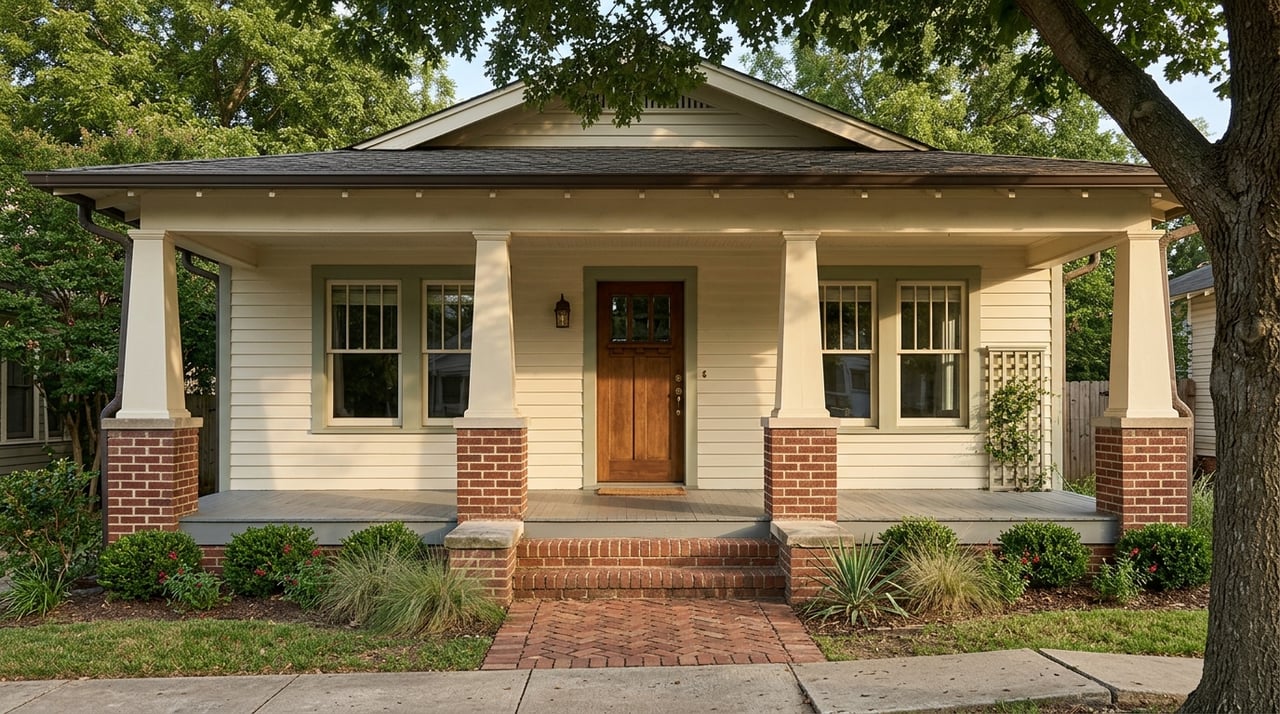
These homes often have features that are hard to recreate well in modern construction. Common details include:
- Asymmetrical facades
- Varied rooflines
- Front porches
- Tall windows
- Decorative trim
- Masonry or wood detailing
When you tour homes, it helps to look beyond cosmetic updates. The original roof shape, porch design, window proportions, and exterior trim may matter just as much as an updated kitchen or bath when it comes to preserving the home’s identity.
Start with the home’s original bones
If you are shopping for a historic Gainesville home, strong original bones should be high on your list. A home with intact character-defining features and manageable deferred maintenance is often a better long-term choice than one that has been heavily altered or poorly repaired.
The Texas Historical Commission describes rehabilitation as making a property usable through repair, alterations, and additions while preserving the features that convey its historic and architectural value. In practical terms, that means the best candidate is often a home that still has enough original fabric left to repair thoughtfully.
This can change how you view updates. Instead of asking only what has been replaced, it is smart to ask what has been retained, what has been altered, and whether past work fits the home’s original style.
Inspection priorities for older Gainesville homes
A historic home inspection should go deeper than a standard cosmetic walk-through. Older homes can be wonderful, but they often need careful review in a few key areas.
Roof and drainage issues
A weather-tight roof is one of the most important items to evaluate. Preservation guidance stresses that roofs, gutters, downspouts, and ventilation all play a major role in protecting a historic structure.
Moisture problems can spread far from the original source. A roof leak may show up as interior staining, wood damage, foundation concerns, or wall moisture elsewhere in the house. That is why buyers should pay close attention to the roof, drainage, grading, and any signs of long-term water intrusion.
Windows and exterior materials
Windows are often a major decision point in older homes. Historic windows are frequently repairable, and storm windows or weatherstripping can improve performance without changing the home’s appearance.
When you inspect the property, look for rot, failed glazing, peeling paint, and replacement windows that seem out of proportion with the original openings. Mismatched windows can affect both appearance and future repair decisions.
Environmental hazards in older homes
Because many character homes were built before 1978, lead-based paint is an important due-diligence issue. Buyers of pre-1978 housing have the right to receive known lead information before signing a contract.
Asbestos is another concern during renovation planning. It cannot be identified by sight alone, so suspect materials should be sampled by a trained professional before any work begins.
Code-related upgrades
Historic homes may also need updates tied to code, safety, or accessibility. The challenge is that this work can affect original finishes if it is not planned carefully.
That does not mean you should avoid an older home. It means you should budget for thoughtful evaluation and avoid assuming a quick cosmetic remodel will solve everything.
Renovation can be different from remodeling
One of the biggest mindset shifts with a Gainesville character home is understanding that rehabilitation is often a better approach than a standard remodel. With a newer home, owners may feel free to replace features simply for convenience or style. In a historic home, original materials are often part of the value.
Preservation guidance generally favors a clear order of decision-making:
- Protect and maintain historic materials
- Repair existing features where possible
- Replace only when deterioration is too extensive
That approach matters for roofs, windows, porches, trim, and masonry. If you remove too many of those details, the home may lose the very character that drew you to it in the first place.
Check Gainesville overlay rules early
Before you plan exterior work, verify whether the property is inside Gainesville’s HP Heritage Preservation Overlay District or another regulated area. The city’s planning and zoning framework includes heritage-preservation regulations and design standards for exterior development, construction, reconstruction, and rehabilitation within the overlay.
That means exterior changes may be reviewed differently depending on the property’s location. Standards can affect things like architectural detailing, facades, and the overall compatibility of changes.
This is one of the most important steps for buyers who already have renovation ideas. It is far easier to understand the property’s review requirements before closing than after you have built a budget around assumptions.
National Register and local rules are not the same
Buyers sometimes assume any historic designation automatically limits what they can do with a property. In Texas, that is not always the case.
According to the Texas Historical Commission, National Register listing by itself does not restrict a private owner’s ability to alter or sell a property. Local designation is where exterior review standards usually come into play.
That distinction matters in Gainesville. A home may carry historic recognition, but the practical rules for changes often come down to local overlay status and city standards.
Do not count on tax credits for a primary home
Incentives sound attractive, but they are not universal. The Texas Historic Preservation Tax Credit program applies to certified historic buildings that are income-producing or nonprofit.
For most buyers purchasing an owner-occupied home, that means you should not assume a state historic tax credit will help offset renovation costs. If a property’s future use changes, such as an income-producing use, the picture may be different, but that is a separate analysis.
Updates that protect value
When it comes to future appeal, compatibility matters. Gainesville’s planning documents emphasize character and aesthetic appeal, while preservation guidance emphasizes keeping historic fabric and character-defining features.
A smart working rule is simple: updates tend to support long-term appeal when they fit the home’s original design. Keeping the original massing, porch details, roofline, masonry, and window proportions can help preserve the qualities that make the home attractive to buyers.
By contrast, generic replacements that erase the home’s historic identity may reduce the very charm that sets it apart. If you are choosing between fast changes and compatible ones, the compatible path is often the better long-term investment.
A practical buying strategy
If you are serious about buying a character home in historic Gainesville, a measured approach can save you stress and money. Focus on the home’s condition, historic integrity, and location-related rules before you get attached to cosmetic features.
A practical checklist includes:
- Confirm the home’s age and architectural style
- Look for original exterior features that remain intact
- Prioritize roof, drainage, and moisture review
- Inspect windows for condition and compatibility
- Ask about known lead-based paint information for pre-1978 homes
- Evaluate possible asbestos concerns before renovation
- Verify whether the property is in the heritage preservation overlay
- Budget for repairs that preserve, not just replace
The goal is not to find a perfect old house. The goal is to find one whose charm, condition, and repair path make sense for your plans.
If you want help evaluating homes in Gainesville and the surrounding North Texas market, Lake & Country Realty® offers buyer representation with the kind of local, hands-on guidance that can help you make a confident decision.
FAQs
What makes a historic Gainesville home a character home?
- A character home in Gainesville usually has older architectural details such as porches, tall windows, decorative trim, varied rooflines, masonry, or wood detailing tied to styles like Victorian, Queen Anne, or Italianate influences.
What should buyers inspect first in an older Gainesville house?
- Buyers should pay close attention to the roof, drainage, moisture issues, windows, and signs of deferred maintenance because those items often have the biggest impact on repair costs.
Are historic windows in Gainesville homes always supposed to be replaced?
- No. Preservation guidance says historic windows are often repairable, and upgrades like weatherstripping or storm windows may improve performance without changing the home’s appearance.
Do Gainesville historic homes have renovation rules?
- Some do. Buyers should verify whether a home is in Gainesville’s HP Heritage Preservation Overlay District or another regulated area, because exterior work may be subject to local standards and review.
Does National Register status restrict changes to a Gainesville home?
- Not by itself. The Texas Historical Commission says National Register listing alone does not restrict a private owner’s ability to alter or sell a property, while local designation is usually where exterior review standards apply.
Can you get a Texas historic tax credit for a primary residence in Gainesville?
- Usually no. The Texas Historic Preservation Tax Credit program applies to certified historic buildings that are income-producing or nonprofit, not typical owner-occupied homes.