If your perfect morning includes the sound of nickers and a view of open pasture, the Collinsville area belongs on your short list. You get a laid-back North Texas setting with quick access to lakes, trails, and room to ride. In this guide, you’ll learn how to size acreage for your herd, what to look for in barns and fencing, how wells and septic systems work out here, and which tax rules matter for horse owners. You’ll also get a practical touring checklist to bring on property visits. Let’s dive in.
Why Collinsville works for horse owners
Collinsville sits in northwest Grayson County, with rural tracts surrounding town and along corridors toward Lake Ray Roberts and Lake Texoma. Some addresses with a Collinsville ZIP may fall in Cooke County, so confirm the parcel’s county using Collinsville’s 76233 ZIP reference before you assume which appraisal or permitting office applies.
Outdoor access is a big perk. Trail riders and weekend explorers often head to Ray Roberts Lake State Park for riding, camping, fishing, and water access. The broader Lake Texoma corridor adds more recreation and open space nearby.
Inventory ranges widely. You’ll find small hobby ranches on 5–40 acres and larger working or training facilities with extensive barns and arenas. The mix gives you options whether you want a private setup or something with room to scale.
How much land you need
A common guideline for pasture-based turnout is about 1.5–4 acres per mature horse. The lower end assumes well-managed, productive pasture and some supplemental hay, while the higher end supports more year-round grazing. University extension materials outline these ranges for equine owners and stress that actual needs depend on soil, rainfall, and management. See the principles in this pasture management guide.
In North Texas, warm-season grasses and variable rainfall mean productivity can swing with weather. The takeaway: plan conservatively, budget for hay during dry periods, and consider rotational grazing to stretch your forage. Texas A&M AgriLife also offers guidance on adapting care to sandy soils common in parts of the region. Review their notes on Texas sandy-soil pastures.
Smart pasture and paddock layout
Rotational grazing works best with multiple paddocks and a designated sacrifice or dry lot near the barn for high-traffic days. At minimum, split turnout into two paddocks so one can rest while the other is grazed. For even better results, aim for 4–8 paddocks, with water access in every paddock and shelters on higher ground to reduce mud and erosion. You can find design basics in this extension resource.
Soil varies across the Collinsville area. Sandy or shallow spots need different grass species and maintenance than heavier soils. A simple soil test and a basic pasture plan go a long way. Texas A&M AgriLife provides practical tips for grazing and care in sandy-soil conditions.
Safe, horse-friendly fencing
Highly visible, horse-safe fencing reduces injuries and escapes. Common choices include post-and-rail, vinyl rail, or no-climb/woven mesh paired with a top board. Many owners add a single strand of hot wire or tape as a psychological barrier inside paddocks. Barbed wire is generally discouraged for horses due to laceration risks. When touring, check visibility, wire condition, broken rails, and gate hardware. Extension guides cover best practices in equine pasture fencing safety.
Barns, stalls, and storage that work
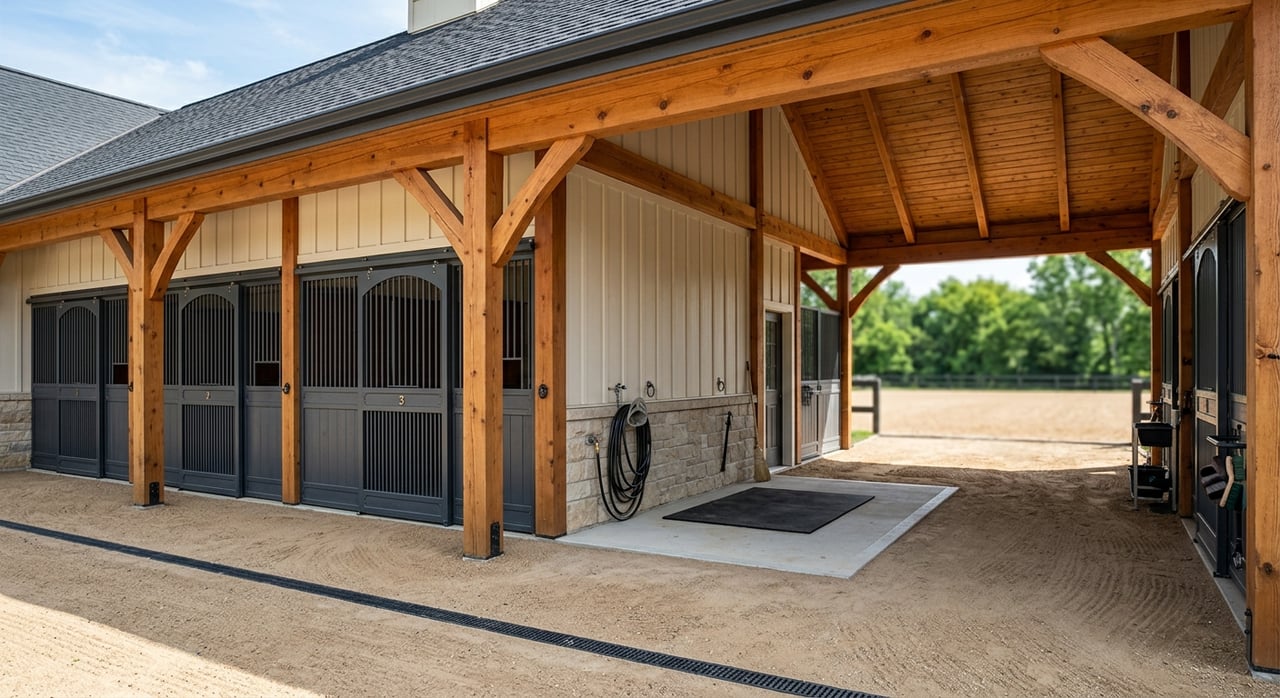
For average adult horses, a 12' × 12' box stall is a common standard, with larger breeds or performance horses often better in 12' × 14' or 14' × 14'. Ventilation, ceiling and aisle heights, and safe stall fronts matter as much as square footage. For layout ideas and sizing, see these stable design basics.
Keep hay dry and well ventilated, and, if possible, store it separately from stalls for fire safety. Check that the barn has the electrical capacity and water lines you need for fans, heaters, and automatic waterers. If a property includes an arena or round pen, verify who built the base and what footing is installed. Dimensions vary, but many private-use rectangles run around 100' × 200', dressage standards are 20 m × 40 m or 20 m × 60 m, and round pens are often 50–60 feet in diameter. Learn what makes a rideable surface in this overview on arenas and footing.
Water, septic, and access basics
Many rural Collinsville properties rely on private wells, while some near town connect to co-op or municipal water. Ask for well logs, any recent pump tests, and how water is distributed to troughs and barns. For wastewater, most rural homes use on-site septic systems. You can find county contacts and permitting information through Grayson County’s development and health pages. Confirm the system’s permitted capacity matches your home’s bedroom count and intended use.
Access matters when you haul horses or receive hay and shavings. Look for trailer-friendly driveways with a safe turning radius, firm parking, and clear road maintenance responsibility. Properties noting county road frontage often offer easier year-round access.
Plan for manure, dust, and flies
A tidy manure plan keeps paddocks healthy and neighbors happy. Designate a storage or composting area, set a routine removal schedule for high-use zones, and maintain vegetative buffers near ponds or streams. If a property borders water, fencing off edges and providing alternate water sources helps reduce runoff. For a quick overview of best practices, see manure and pasture BMPs.
In summer, fly pressure increases and arenas or dry lots can get dusty. Look for ventilation, shade, and fly control methods around barns, and ask about dust mitigation where you plan to ride.
Topography and flood risk
Try to site barns, runs, and arena pads on higher ground with positive drainage. Low pockets stay soggy, damage footing, and invite hoof problems. Before you make an offer, check FEMA flood maps for the parcel in the Flood Map Service Center and ask the seller about any prior elevation surveys or flood history.
Taxes and rules to know
Texas offers an open-space agricultural appraisal (often called a 1-d-1 or ag valuation) that can reduce property taxes when land is used primarily for qualifying agricultural production. Keeping horses strictly for recreation, boarding, training, or showing usually does not meet those standards. Operations focused on breeding or sales may qualify if they meet your county’s intensity requirements. Review the state’s guidance in the Texas Comptroller FAQ and confirm local standards with the applicable county appraisal district.
Because the Collinsville ZIP extends into Cooke County in some areas, confirm the parcel’s county and which appraisal district and permitting offices apply using the 76233 ZIP reference and Grayson County resources. Keep production records, pasture plans, and any hay production or sales documentation if you plan to pursue an ag valuation.
Touring checklist: Collinsville horse properties
Use this quick checklist during showings.
Parcel and legal
- Confirm parcel’s county, CAD parcel number, and current appraisal class or any open-space valuation.
- Request deed, recorded easements, and any restrictions or covenants.
Exterior and site
- Inspect perimeter and cross-fencing: visibility, materials, height, and gate widths for trailers. See equine fencing safety basics.
- Evaluate pasture condition: grass cover, weeds, and number/layout of paddocks; check water access in each paddock.
- Note topography and drainage. Ask for elevation surveys and verify flood zones with FEMA maps.
- Confirm road type and maintenance, distance to a paved highway, and trailer turning and parking space.
Barns and facilities
- Measure stalls and aisles; check ventilation, door widths, and stall-front safety. For standards, see stable layout tips.
- Ask about arena base, footing type, builder, and maintenance frequency. Learn footing essentials in this arena guide.
- Verify tack, feed, and hay storage capacity; check water lines, electric service, and pump wiring.
Utilities and environmental
- Request well logs or water tests; confirm septic permits, last pump or inspection date, and any drainage or erosion concerns. County contacts: Grayson County.
- Identify manure storage location and handling schedule.
Business and legal
- If you plan to board, train, or sell horses, verify local zoning or any required permits, and consult your insurer about coverage for commercial activities.
Nearby amenities and services
For weekend riding and water recreation, many locals head to Ray Roberts Lake State Park. The broader North Texas equine network spans vets, farriers, trainers, and feed suppliers across towns like Sherman, Denison, and Gainesville, plus options toward the Metroplex. When you shortlist a property, check drive times to your preferred vet and farrier.
How we help
Buying acreage is different from buying a house in town. You need local insight on soil, water, fencing, and ag rules, plus a plan for marketing if you decide to sell down the road. Our boutique team lives and works in North Texas and specializes in lakefront, ranch, and acreage properties. We combine hands-on guidance with modern tools like virtual tours and targeted syndication to help you move confidently.
Ready to find the right horse property around Collinsville? Talk to a local specialist who understands barns, pastures, and the lifestyle you want. Connect with Lake & Country Realty® to start your search.
FAQs
How many acres per horse do I need in North Texas?
- Plan on 1.5–4 acres per mature horse depending on pasture quality, rotational grazing, and how much supplemental hay you feed. See extension guidance in this pasture management overview.
Do horses qualify my land for an ag valuation in Grayson County?
- Not by default. Recreational use, boarding, training, or showing usually does not qualify. Breeding or sales may qualify if local intensity standards are met. Review the Texas Comptroller FAQ and confirm with your county appraisal district.
What fencing is safest for horses on rural Texas properties?
- Highly visible options such as post-and-rail, vinyl rail, or woven/welded mesh with a top board are common. Avoid barbed wire. Inspect visibility, tension, and gate hardware. See equine fencing basics.
What should I verify about wells and septic before closing near Collinsville?
- Ask for well logs, any recent pump tests, water line mapping to paddocks, septic permits, and last inspection or pump date. County contacts and forms are at Grayson County’s site.
Where do I check flood risk for a rural parcel around Collinsville?
- Use FEMA’s official Flood Map Service Center to review flood zones for the specific parcel, and ask the seller about any elevation surveys or flood history.